Happy Thursday!
The last thing most people have on their mind leading up to Christmas is tanning.
You’re probably thinking more about family, food, and finding the perfect gifts for your family members.
But that’s precisely why I want to talk today about Melanotan 1 and how it has been unfairly pigeonholed into one category.
If you’re familiar with MT-1, you probably think of it as the “tanning peptide.”
And yes, it stimulates pigmentation.
But that’s the least interesting thing about it.
When you actually look into the human clinical research, you discover something much more.
Melanotan-1 is a neuroimmune modulator, a pain-modulating compound, and a photoprotective agent that changes how the body responds to inflammation, oxidative stress, and even DNA damage.
Today, I want to give you a new way of thinking about this peptide, one that goes far beyond skin tone and dives into longevity, inflammation control, and pain reduction backed by real human studies.
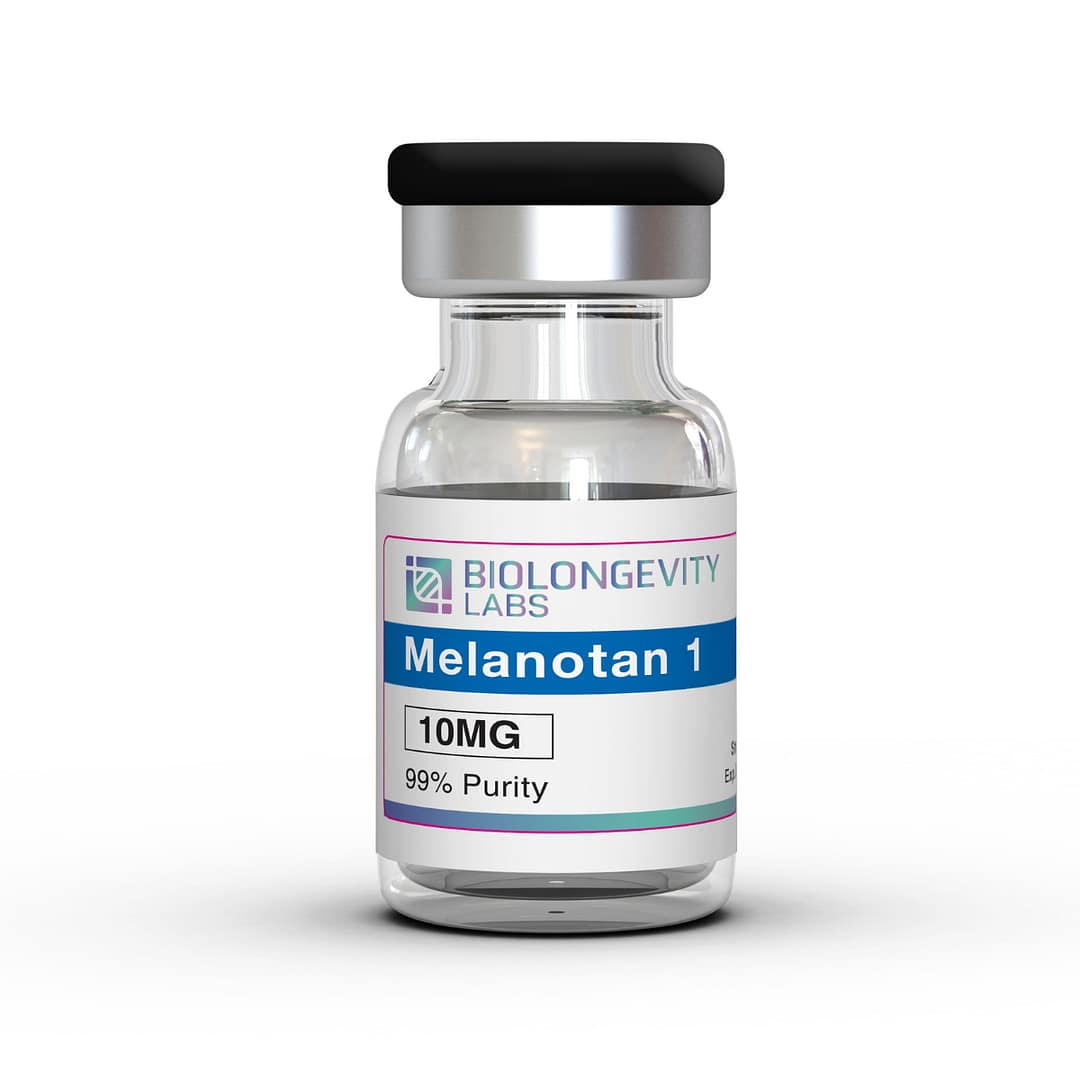
You can still get 40% off any peptide vial (including MT-1) at BioLongevity Labs and an additional 15% off when you use code HUNTERW at checkout.

Anti-Inflammatory Power
The most overlooked benefit of Melanotan-1 is its ability to dramatically blunt inflammatory responses in human skin.
A controlled human trial demonstrated that MT-1:
Reduced pro-inflammatory cytokines (TNF-α, IL-1β, IL-6) after UV exposure
Improved DNA repair signaling
Reduced visible redness and swelling
Participants had significantly less erythema (redness) after UV exposure, and biopsies revealed downregulation of inflammatory gene expression, which is incredibly rare to see from a tanning-associated compound.
Mechanistically, this makes sense.
MT-1 activates the melanocortin receptors (MC1R and MC3R), which influence inflammatory pathways throughout the body.
When activated, these receptors decrease NF-κB activity, the same inflammatory pathway targeted by compounds like curcumin and certain biologic drugs.
The end result?
Your body produces less inflammatory fire, and your cells repair damage faster.
Whether it’s sun exposure, oxidative stress, or inflammation-driven pain, MT-1 reduces the signal and accelerates recovery.
Pain Modulation
Multiple human studies, including EPP (erythropoietic protoporphyria) trials published in The New England Journal of Medicine, demonstrate impressive improvements.
In EPP patients exposed to sunlight (which causes extreme burning pain), MT-1 (afamelanotide) led to:
Significant reductions in phototoxic pain
Longer pain-free light exposure (+171% more time outside vs placebo)
Faster recovery from inflammatory pain episodes
Which makes sense because, mechanistically, MT-1 reduces:
Substance P (a neurotransmitter of pain and itch)
CGRP (calcitonin gene-related peptide — the same pathway targeted by modern migraine drugs)
Peripheral nerve hypersensitivity
Mast cell activation (one of the main drivers of redness and burning sensation)
In human skin, MT-1 reduces neurogenic inflammation by suppressing the neuropeptides that send “pain” signals to the brain.
This is why patients with EPP report fewer and less intense pain episodes.
I also suspect that a microdose of MT-1 could help reduce mast cell activation in immunosensitive people.
MT-1 is mechanistically closer to an anti-inflammatory analgesic peptide than a cosmetic drug.
Oxidative Stress Defense
Most people don’t realize this, but Melanotan-1 enhances the skin’s resilience in ways that are directly tied to longevity.
In controlled UV exposure trials, MT-1 administration resulted in:
Higher minimal erythema dose (MED) — meaning the skin could handle more UV without burning
Reduced oxidative DNA photodamage
Lower cyclobutane pyrimidine dimers (CPDs) — the DNA lesions responsible for skin aging and cancer risk
Tanning is downstream of all the upstream processes MT-1 kickstarts.
The real story is that MT-1 strengthens the cell's photoprotective pathways, improves DNA repair capacity, and reduces the inflammatory cascade that accelerates skin and mitochondrial aging.
Even if you never cared about tanning again, the photoprotective and oxidative stress benefits alone would make MT-1 worth researching.
Dosage
When people think of melanotan dosing, they imagine high-dose tanning protocols.
But for the ancillary benefits we’re discussing today, the dosing is far lower.
Here’s the sweet spot for the non-tanning benefits:
Melanotan-1: 250mcg 1-2x per week
That’s it.
No loading phase.
No daily injections.
No tanning protocols.
At this dosage, people typically do not notice meaningful skin darkening. But they do notice:
Improved sunlight tolerance
Reduced inflammation
Better skin recovery
Less burning or redness
More stable responses to UV-induced oxidative stress
Less neurogenic pain after sun exposure
Less mast cell activation
Beyond tanning, we should view MT-1 as a neuroimmune-modulating melanocortin peptide.
Don’t forget, you can snag MT-1 from BioLongevity Labs for 40% off, plus an additonal 15% off when you use code HUNTERW!
Final Thoughts
Melanotan-1 is one of the most underrated peptides in the entire therapeutic landscape.
If all you know about it is “the tanning peptide,” then you’ve missed 80% of what makes it powerful.
Human trials repeatedly demonstrate that MT-1:
Reduces inflammation
Improves DNA repair
Raises pain thresholds
Lowers neurogenic inflammatory signaling
Enhances sunlight tolerance
Improves quality of life in conditions involving light-induced pain
And it does all of this through melanocortin pathways that affect systemic inflammatory, neurological, and immunological processes.
Melanotan-1 is a perfect example of how a peptide’s true benefits remain hidden until you dig deeper.
Best,
Hunter Williams
Further Reading