Happy Tuesday!
I just released a brand new deep-dive episode on Spotify, breaking down the underrated peptide Pinealon.
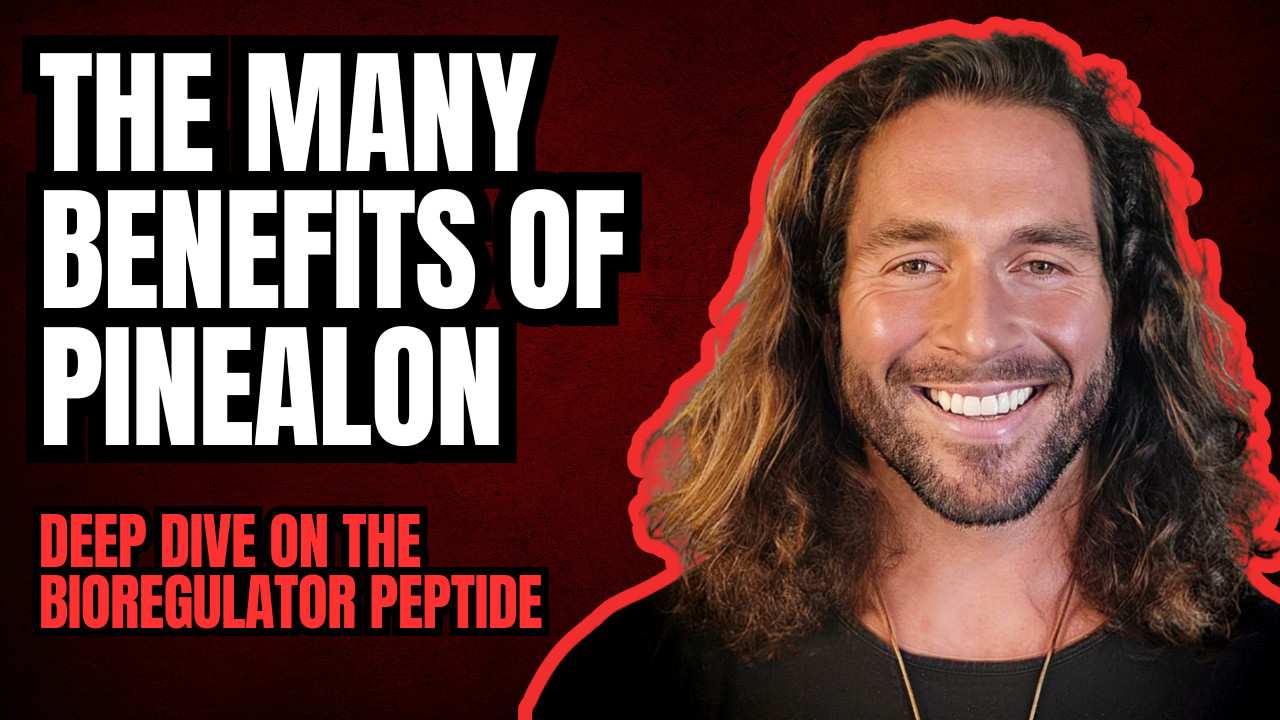
This is an update to a video I filmed years ago, and a lot has changed since then.
Pinealon quietly improves how everything works upstream, especially sleep, circadian rhythm, stress resilience, and long-term brain health.
In the episode, I walk through the injectable form specifically, because while oral Pinealon can work, injections are where this peptide really shines.
I also talk candidly about when I use it, who I think it’s best for, how I dose it, and how it compares to other peptides people are more familiar with.
If you’ve been dealing with disrupted sleep, chronic stress, heavy travel, concussion history, or you’re simply thinking long-term about brain aging, this is one you’ll want to understand.
Below, I want to expand on the ideas from the episode and lay everything out clearly in writing.
FYI, BioLongevity Labs is running a storewide sale where everything is 30% off. You can use code HUNTERW to get an additional 15% off.
Background
Pinealon is a synthetic tripeptide developed through Russian anti-aging research as a peptide bioregulator aimed at slowing aging and supporting brain health.
Its amino acid sequence is Glu-Asp-Arg, and it was originally isolated from Cortexin, another well-known Russian bioregulator used for neurological support.
Even though Pinealon works on the brain and central nervous system and also indirectly supports pineal function, circadian rhythm, and neurotransmitter balance.
Pinealon tends to feel different from classic stimulatory nootropics.
It’s been used experimentally in Russia for decades, particularly in aging populations, cognitive decline, traumatic brain injury, and stress-related neurological dysfunction.
From my perspective, Pinealon sits in that category of peptides that don’t announce themselves loudly, but over time, you realize things are just working better.
Mechanisms
Pinealon’s mechanisms help explain why it’s so hard to pin down to one specific effect.
When injected, Pinealon crosses the blood-brain barrier and penetrates cells, including the nucleus. There, it interacts with DNA and RNA, influencing gene expression through pathways like MAPK and ERK signaling. This is important because those pathways regulate cell survival, inflammation, and aging.
One of the standout features of Pinealon is that it downregulates pro-apoptotic factors such as caspase-3 and p53 while upregulating antioxidant enzymes such as SOD2 and GPX.
In plain English, it reduces programmed cell death in the brain and increases the brain’s ability to neutralize oxidative stress.
Pinealon has a genuine antioxidant effect in neurons, suppressing reactive oxygen species under oxidative stress.
It also protects mitochondrial function and helps maintain cellular energy balance, specifically in brain tissue.
On top of that, Pinealon reduces loss of dendritic spines, normalizes over-activated cell death pathways, and keeps inflammatory cascades from running unchecked.
It increases serotonin expression and supports melatonin production, which explains why many people notice improvements in mood, sleep quality, and circadian rhythm.
Benefits
Practically speaking, Pinealon shows up across several domains at once.
Cognitively, we see improvements in memory, learning, and mental clarity.
It’s more of a one-to-two-week realization that your brain feels sharper, calmer, and more efficient.
Animal studies show preserved cognitive function under adverse conditions such as diabetes and prenatal stress, and human data suggest improved perceptual speed and cognitive performance in older adults.
From a neuroprotection and longevity standpoint, Pinealon supports neuronal survival and regenerative capacity.
In a small human trial involving older adults with cognitive impairment, Pinealon improved central nervous system activity and slowed biological aging markers without genetic damage. It protects against oxidative stress, impaired blood flow, hypoxia, and neuroinflammation.
Where Pinealon really stands out for me personally is sleep and circadian rhythm.
It improves sleep quality, normalizes sleep-wake rhythms, increases natural melatonin release, and supports deep REM sleep without grogginess. This makes it incredibly useful for travel, jet lag, night-shift work, or prolonged periods of stress.
Mood-wise, Pinealon boosts serotonin, modulates cortisol, and improves HPA-axis resilience.
People often report feeling calmer yet more mentally alert, a rare combination.
It’s also been explored for eye health, hearing, tinnitus, immune regulation, and exercise recovery via mitochondrial support.
Dosage
Dosing is where things get interesting, because there’s a wide range of approaches.
Most conservative protocols you’ll see online recommend 100–300 micrograms per day, injected subcutaneously for 10–20 days. That dose absolutely works for many people, especially if you’re just looking for subtle circadian or cognitive support.
Personally, I like 2 mg per day, and I’ve used that dose for anywhere from 10 to 60 days depending on the situation. Shorter cycles make sense for acute issues. Longer cycles make sense for prolonged stress, HPA dysfunction, or heavy travel.
One thing I noticed at higher doses is that timing matters.
When I took Pinealon at night, I sometimes experienced restlessness and a higher heart rate. Switching it to the morning solved that completely.
Interestingly, it doesn’t sedate you in the morning or overstimulate you at night.
Another option is microdosing over longer periods, starting around 200 mcg per day and titrating up to 500 mcg over 8–12 weeks, totaling around 20 mg per cycle.
As a general rule, I wouldn’t exceed 100–120 mg total per year. The effects tend to persist well after you stop, which suggests long-lasting regulatory changes rather than transient stimulation.
Final Thoughts
Pinealon is one of the most quietly effective peptides I’ve used for brain health, sleep regulation, stress resilience, and long-term cognitive protection.
It enhances function, supports recovery from neural stress, and may slow certain aspects of brain aging without overloading the system.
It stacks exceptionally well with Epitalon, Cerebrolysin, Semax, and Selank, and it’s affordable relative to its upside.
If you’ve had concussions, struggle with circadian rhythm, deal with chronic stress, or simply want to be proactive about brain aging, Pinealon deserves a spot on your radar.
As always, thank you for being here. None of this exists without your support, whether that’s being on the email list, listening to the podcast, joining the group, or sharing this work with someone who needs it.
I appreciate you more than you know!
Best,
Hunter Williams
Further Reading